

I was on my third novel when I realized that I had something.
The setting was vivid. The characters wouldn’t stop talking. My writing group had great feedback… and then the suggestions started coming.
Open later.
More cave scene.
Dead body in scene one.
More police procedural.
Less cave scene. (Sigh.)
So I went back and tried to address every comment. I revised the opening. Then I revised the revisions. I changed the POV from third to first person… and then back again. (You know where I’m going with this.)
By the fifth (or sixth?) revision, I had a binder of pages I’d printed, cut, and literally taped back together. Halfway through and completely overwhelmed, I closed the binder, slid it into a cabinet, and haven’t touched it in sixteen years. I understand now that I was stuck because I was revising at the wrong layer. I was polishing scenes before I really understood the structure and committed to the story I wanted to tell.
Before you revise a single sentence after finishing a first draft, pause.
Most writers jump straight into fixing the prose. Making line edits feels productive, and you can see the improvement immediately. Instant gratification. But the structural problems are still there.
Instead, start with a skeleton pass. It will show you the story that exists, so you can compare it to the story you want to tell and identify the structural fixes needed first.
When I do this for my own drafts (and what I recommend for clients), these are the bones I track first:
- Scene # + Title
- POV Character
- Other Characters Present
- Setting
- External Plot (what happens)
- Internal Point (why it matters emotionally)
- Clues + Red Herrings
- Notes
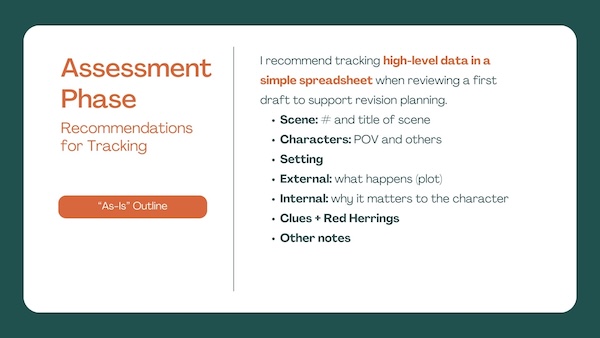
In the next day or so, open a spreadsheet (Google Sheets is free) and add your scene data in columns across the top. Then complete one row for each scene. Track what happens, whose point of view carries the scene, why it matters emotionally, and where major turning points or clues appear. When you can see your entire draft at a glance, revision becomes calmer. Instead of reacting sentence by sentence, you’re making structural decisions intentionally.
Structure first, then prose. This intentional preparation for revision creates space — space to think, to decide, and to rebuild with intention.
Featured Image: Photo by Silviu S on Unsplash
Sign up to get this delivered to your inbox, along with updates and announcements!
If you’d like support building your own Revision Map, you can learn more about my Manuscript Evaluation process on my Services page.
Hi, I’m Rebecca Davis, Author Accelerator certified book coach, mystery lover, and former research administrator. I traded grant proposals for plot twists and now I get to help writers find their way through the maze of story and structure. I live on the South Carolina coast, and believe every story needs both a map and a little mystery. Explore Coaching Services →